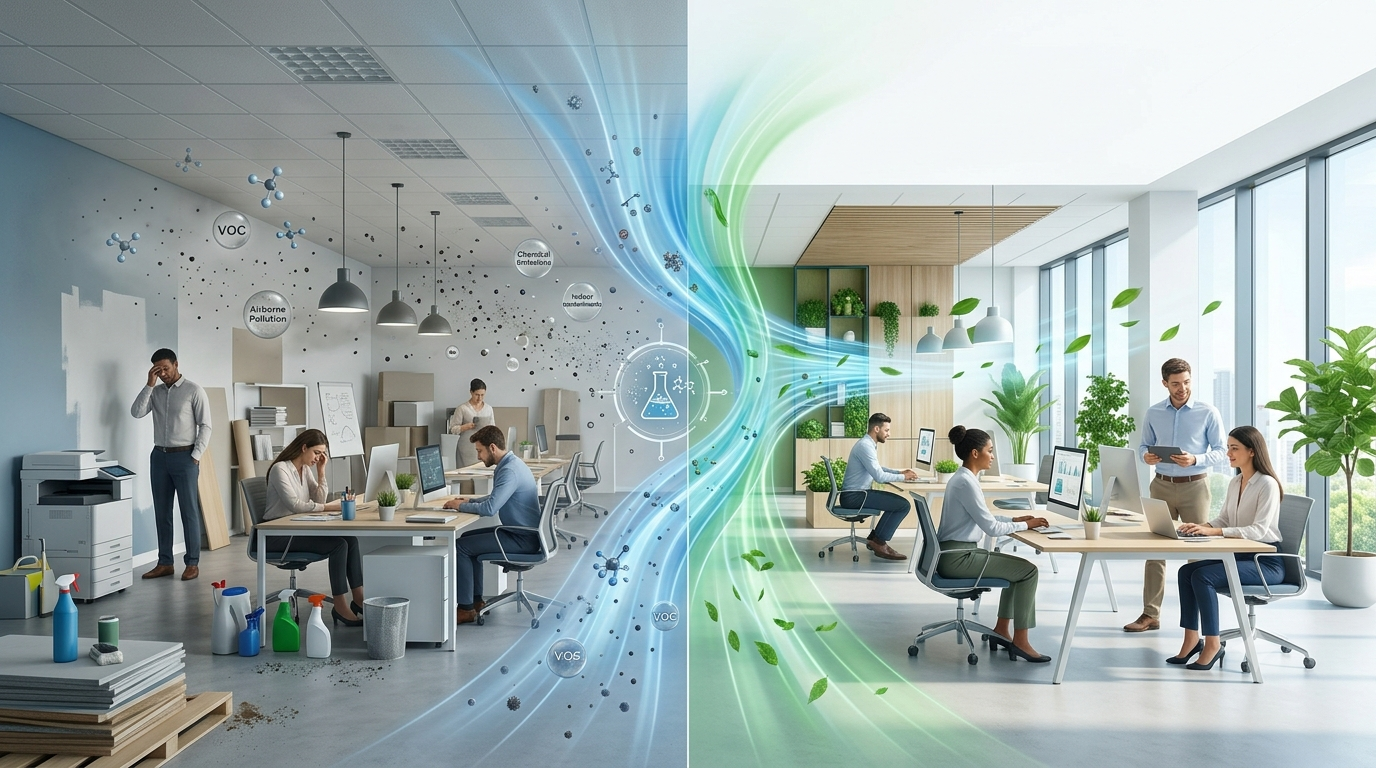
Indoor Air Pollution in Buildings: Causes, Risks and Innovative Air Purification Paint Additive Solutions
Creating Healthier Indoor Environments Through Better Air Quality Management
People spend approximately 90% of their time indoors, making indoor air quality one of the most important factors affecting human health, comfort, and productivity. While outdoor air pollution often receives significant attention, indoor air pollution can sometimes reach even higher concentrations due to limited ventilation, modern building designs, and the presence of various pollution sources within buildings.
Today, building owners, architects, property managers, and sustainability professionals are increasingly seeking effective air pollution solutions that can improve indoor air quality while supporting healthy building initiatives and green construction goals. Understanding the causes, risks, and emerging technologies available to address indoor air pollution is essential for creating safer and more sustainable indoor environments.
Understanding Indoor Air Pollution and Its Impact on Indoor Air Quality
Indoor air pollution refers to the presence of harmful contaminants, gases, particulate matter, odors, volatile organic compounds (VOCs), microorganisms, and other pollutants within enclosed spaces. These pollutants can accumulate over time and negatively affect indoor air quality in residential, commercial, institutional, and industrial buildings.
Poor indoor air quality can be difficult to detect because many contaminants are invisible and odorless. As a result, occupants may unknowingly be exposed to pollutants for extended periods, potentially affecting health, well-being, and workplace performance.
Modern buildings are often designed to maximize energy efficiency by reducing air leakage. While this improves energy conservation, it can also limit natural ventilation, allowing pollutants to remain trapped indoors for longer periods.
Common Building Contaminants That Affect Building Air Quality
Numerous indoor pollution sources can contribute to degraded building air quality, including:
- Construction Materials: Many construction materials release volatile organic compounds (VOCs), formaldehyde, and other chemical emissions during and after installation.
- Traditional Paints and Coatings: Certain paints, coatings, adhesives, and sealants may emit VOCs that contribute to indoor pollution levels, particularly during application and curing periods.
- Furniture and Interior Furnishings: Composite wood products, carpets, upholstery, and furnishings can release chemical emissions over extended periods.
- Cleaning and Maintenance Products: Disinfectants, detergents, air fresheners, and specialty cleaning chemicals may introduce additional airborne contaminants into indoor spaces.
- Occupant Activities: Cooking, printing, office equipment operation, smoking, and everyday activities can generate particulate matter and various airborne pollutants.
- Outdoor Pollutants Entering Buildings: Traffic emissions, industrial pollutants, pollen, and dust can infiltrate buildings through ventilation systems, windows, and entry points.
Health Risks Associated With Poor indoor Air Quality and Sick Building Syndrome
Poor indoor environments are often linked to Sick Building Syndrome (SBS), a condition where building occupants experience health symptoms that appear related to time spent inside a particular building. Common symptoms may include:
- Headaches
- Eye, nose, and throat irritation
- Fatigue
- Difficulty concentrating
- Respiratory discomfort
- Dizziness
- Allergic reactions
Long-term exposure to certain airborne pollutants may also contribute to more serious health concerns, particularly for sensitive populations such as children, older adults, and individuals with respiratory conditions. As awareness of indoor environmental quality continues to grow, organizations are increasingly prioritizing healthier indoor spaces to support occupant wellness and productivity.
Economic Consequences for Unhealthy Buildings and Businesses
Indoor air quality is not only a health issue but also a significant economic consideration. Poor air quality may contribute to:
- Reduced employee productivity
- Increased absenteeism
- Higher facility maintenance costs
- Greater occupant complaints
- Reduced tenant satisfaction
- Lower building attractiveness and market value
Research has shown that healthier indoor environments can improve occupant comfort, enhance workplace performance, and support long-term building value. For commercial property owners and facility managers, investing in indoor air quality improvements can deliver measurable operational and financial benefits.
Sustainability Requirements Driving Green Construction Practices
Governments, regulatory agencies, building certification programs, and sustainability organizations are increasingly emphasizing indoor environmental quality as a critical component of modern building performance.
Green construction initiatives frequently incorporate indoor air quality objectives through:
- Low-emission building materials
- VOC reduction strategies
- Enhanced ventilation systems
- Sustainable design practices
- Occupant wellness programs
- Environmental certification frameworks
Programs such as LEED®, WELL Building Standard™, and other sustainable building frameworks encourage measures that help create healthier indoor environments while supporting broader environmental goals.
As a result, demand continues to grow for innovative technologies that can actively contribute to cleaner indoor air.
Comparing Air Pollution Solutions: Filtration Versus Air Purification Technologies
Traditional air quality improvement strategies typically focus on filtration systems designed to capture airborne particles.
Air Filtration Technologies
Air filters can effectively remove dust, pollen, and particulate matter by physically trapping contaminants within filtration media. However, filters generally require regular maintenance and replacement.
Air Purification Technologies
Air purification technologies are designed to actively reduce or neutralize airborne contaminants, including VOCs, odors, and certain gaseous pollutants.
Unlike filtration systems that primarily capture particles, advanced purification technologies may help reduce contaminants directly within occupied indoor environments. Increasingly, building designers are exploring complementary approaches that combine filtration and purification technologies to achieve better overall indoor air quality performance.
Advanced Smart Air Pollution Reducing Paint Additive Supporting Air Purification Paint Development
An emerging innovation in the coatings industry is the development of functional coatings that provide benefits beyond traditional aesthetics and surface protection. One of the fastest-growing categories involves paint that cleans air through advanced air purification technologies.
For paint manufacturers seeking to develop air purifying paint products, NuAIR-CLEAN™ Air Purification Paint Additive offers an innovative solution that can be incorporated into paint and coating formulations. Rather than supplying finished paint products, NuAIR-CLEAN™ is an advanced additive technology designed specifically for paint and coating manufacturers.
By integrating NuAIR-CLEAN™ Air Purification Paint Additive into coating formulations, manufacturers can develop next-generation air purifying paint products that help reduce airborne contaminants and contribute to cleaner indoor environments. This approach transforms ordinary painted surfaces into active contributors to improved indoor air quality while maintaining the appearance and performance expected from modern coatings.
How NuAIR-CLEAN™ Air Purification Paint Additive Addresses Indoor Air Challenges
As building owners and occupants increasingly prioritize healthier indoor spaces, paint manufacturers face growing demand for coatings that provide functional environmental benefits.
NuAIR-CLEAN™ Air Purification Paint Additive helps paint and coating manufacturers address these evolving market needs by enabling the development of advanced coatings designed to contribute to cleaner indoor environments. Key potential benefits include:
- Supports development of air purifying paint products
- Helps address indoor air quality concerns
- Contributes to healthier indoor environments
- Enhances value-added coating functionality
- Supports sustainable building objectives
- Creates differentiation opportunities for paint manufacturers
- Suitable for residential, commercial, institutional, and industrial applications
By enabling innovative coating solutions that extend beyond traditional paint performance, NuAIR-CLEAN™ helps manufacturers participate in the growing market for healthier and more sustainable buildings.
Learn More About NuAIR-CLEAN™ Air Purification Paint Additive and Ready to Develop Next-Generation Air Purification Coatings?
Indoor air pollution remains a significant challenge for modern buildings, creating health, productivity, and sustainability concerns across multiple sectors. As awareness of indoor environmental quality continues to grow, innovative technologies will play an increasingly important role in improving building performance and occupant well-being.
NuAIR-CLEAN™ Air Purification Paint Additive represents a new generation of functional coating technology that enables paint manufacturers to develop advanced air purifying paint products capable of contributing to cleaner indoor environments.
What NuviaChem Can Provide
Technical Data Sheet (TDS)
Product Information and Application Guidance
Formulation Support and Technical Consultation
Product Samples for Evaluation
Commercial Trial Support
Partnership Opportunities for Paint and Coating Manufacturers
Contact Us Today
Interested in incorporating air purification technology into your paint or coating products?
Contact NuviaChem today to discuss your project requirements, request technical information, or obtain product samples for evaluation.
By phone: (416) 900-3768
By email: sales@nuviachem.com
By online form: Complete the Inquiry Form / Contact Us
Product Page: NuAIR-CLEAN™ Air Purification Paint Additive
- Learn more about How to Improve Indoor Air Quality with Paint That Cleans Air.
- Learn more about Indoor Air Pollution in Buildings: Causes, Risks and Innovative Air Purification Paint Additive Solutions
Together, let’s create the next generation of innovative coatings that contribute to healthier indoor environments and a more sustainable future.
